BPC-157 vs TB-500: what actually differs
Updated
In short
BPC-157 and TB-500 are unrelated peptides that share a research area. BPC-157 is a 15-residue sequence derived from a protein in gastric juice and is studied largely around angiogenesis and growth factor expression. TB-500 is a shorter synthetic fragment of thymosin beta-4 whose defining property is actin binding. They are paired in the literature because they act through different mechanisms, not similar ones.
The short answer
The two peptides are frequently listed together and just as frequently conflated. They are not analogues of one another, they are not fragments of the same parent protein, and they do not act on the same target. What they share is a research literature: both appear in tissue-repair and angiogenesis work, which is why protocols so often run them side by side.
| BPC-157 | TB-500 | |
|---|---|---|
| Parent molecule | Body protection compound, from gastric juice | Thymosin beta-4, a 43-residue protein |
| Length | 15 residues (pentadecapeptide) | Short synthetic fragment of the parent |
| Defining property in the literature | Angiogenesis and growth factor expression | Actin binding and sequestration |
| Typical research context | Gastrointestinal mucosa, tendon and ligament models | Cell migration, wound models, cytoskeletal assays |
| Stability in aqueous solution | Notably stable | Standard peptide handling applies |
| Catalogue sizes | 5 mg, 10 mg | 5 mg, 10 mg |
Where BPC-157 comes from
BPC-157 is a synthetic sequence corresponding to a partial fragment of body protection compound, a protein isolated from human gastric juice. It is not a fragment of a growth factor and it is not a hormone analogue. The stability that gets mentioned in almost every description is genuine and practically useful: it survives aqueous conditions that degrade many peptides of comparable size, which simplifies handling in longer assays.
In published work it appears most often in gastrointestinal models, and secondarily in tendon and ligament fibroblast assays. The readouts are usually angiogenesis markers and growth factor expression rather than direct receptor binding — BPC-157 has no single well-established receptor, which is a real limitation when designing a mechanistic experiment around it.
Where TB-500 comes from
TB-500 is a synthetic fragment spanning the actin-binding region of thymosin beta-4. The parent protein is 43 residues; synthesising all of it is impractical at catalogue scale, and the fragment retains the actin-sequestering behaviour that most of the literature is interested in.
Why they are studied together
Because the mechanisms are different, not because they are similar. A protocol that pairs them is usually testing whether an angiogenic input and a cytoskeletal input produce an additive result — which only works if each is reconstituted separately, so the ratio stays under the experimenter's control.
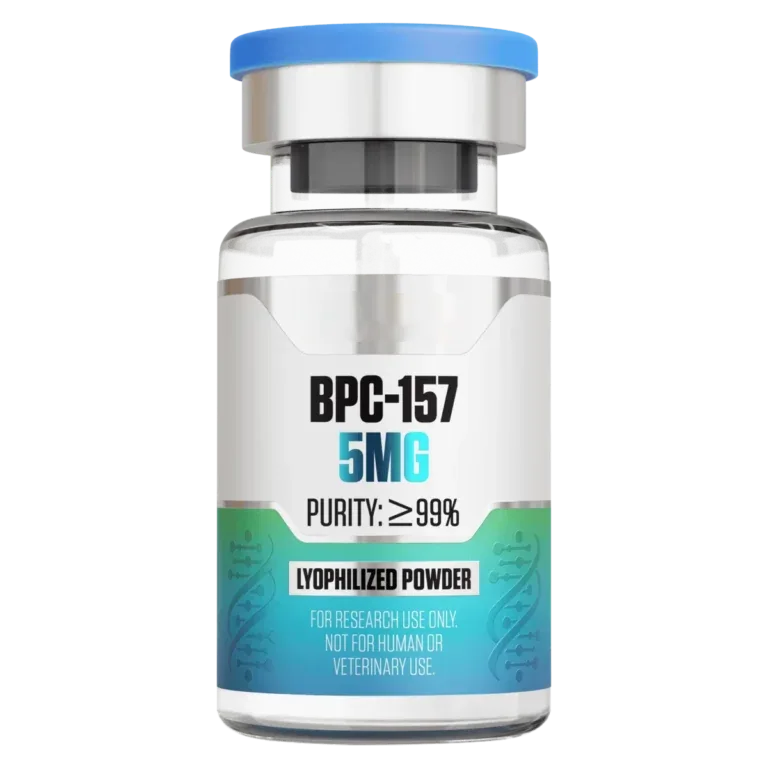
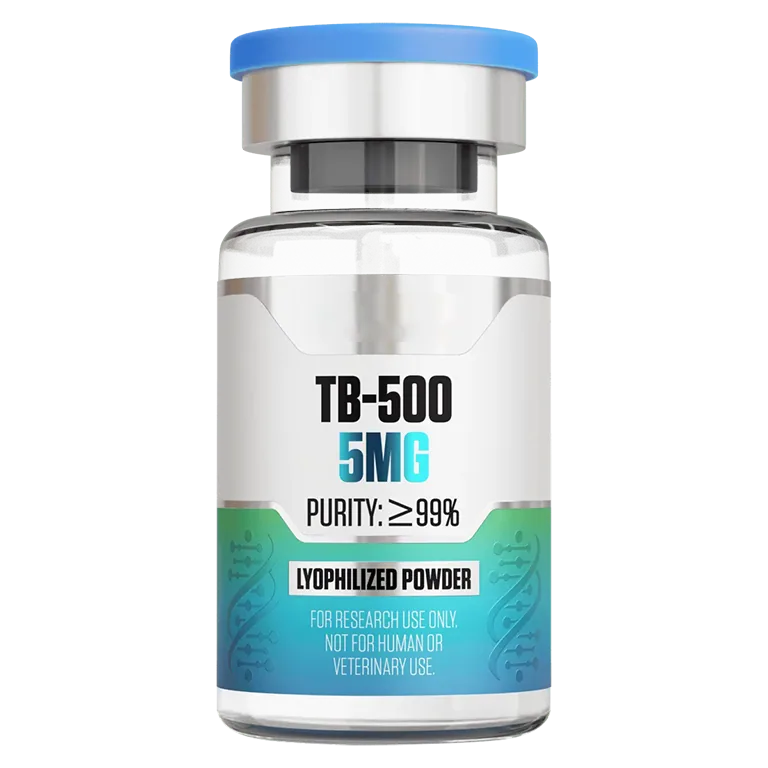
Both compounds are stocked as single-peptide vials in two fill sizes each, so a paired protocol means two reconstitutions and a ratio you set yourself rather than one inherited from manufacture.
Products discussed in this guide
Frequently asked questions
- Are BPC-157 and TB-500 the same class of peptide?
- No. BPC-157 is derived from body protection compound found in gastric juice; TB-500 is a fragment of thymosin beta-4. They are structurally unrelated and act through different mechanisms — they simply appear in overlapping research literature.
- Is TB-500 the same as thymosin beta-4?
- No. TB-500 is a short synthetic fragment covering the actin-binding region of thymosin beta-4. It lacks the remainder of the 43-residue parent protein, so results are not automatically transferable between the two.
- Can BPC-157 and TB-500 be used in the same protocol?
- They are frequently paired in the literature. Both are stocked as separate single-peptide vials, so each is reconstituted on its own and the ratio between them stays an experimental variable rather than something fixed at manufacture.
All products referenced are sold for research, laboratory, or analytical purposes only, and are not for human consumption.